
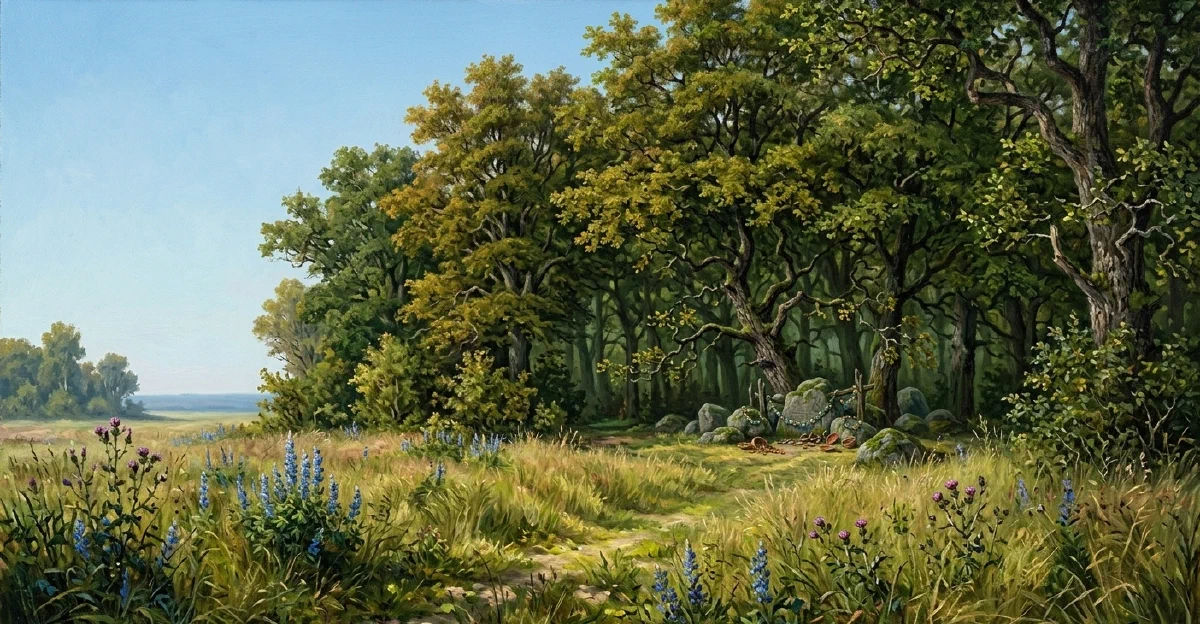

Even in the earliest hunter-gatherer societies, humans were acutely aware of their absolute dependence on the whims of the environment. The dividing line between human civilization and wild nature was not a sharp boundary, but a fluid transition. Forests, rivers, and mountains were not viewed as inert matter, but as living actors filled with intent and agency. In this worldview, human survival was a constant dialogue with the unseen forces of the surroundings. Leaving out food was the primary language of this dialogue—an act of communication meant to express respect and secure one’s own survival. With the transition to settled life and the emergence of the first high civilizations in the Fertile Crescent, Egypt, and East Asia, human lifestyles changed drastically, yet the practice of offering food endured. It evolved from an archaic act of protection into a highly complex system of rites, seasonal festivals, and sacrificial cults. People no longer fed merely the tangible animals of the forest, but symbolically the guardians of the natural forces themselves. A harvest thanksgiving was simply unthinkable without returning a portion of the yield to the earth, as keeping the entire harvest was understood as theft from the powers that had enabled growth in the first place.
In the European Middle Ages and the early modern period, these concepts survived in folklore long past Christianization. Although the official Church strictly prosecuted pagan sacrificial customs, simple farmers in rural regions held fast to the old traditions. Setting out a bowl of milk, leftover bread, or nuts at the edge of the forest or beneath the farmstead’s oldest tree remained deeply rooted in daily life. It was a mixture of superstition, reverence for the unknown, and a deep desire to live in harmony with the invisible inhabitants of the landscape. Thus, a common thread stretches from the first symbolic food offerings beside Stone Age campfires to the modern feeding stations in our gardens today. Even if we explain the motivations through biology and ecology now, the core of the act remains strikingly identical: a deeply ingrained human impulse not only to take from nature, but to give back a portion of what it grants us.
The sacred menu
The choice of what to leave behind at the edge of the woods, beside a river, or under an ancient tree was never arbitrary. Long before formal doctrines existed, laying down food was an intimate, everyday act of sharing—an extension of the human hearth into the wild. Unlike rigid temple rituals mediated by priests, this wild feeding was an organic gesture of care, driven by a desire to sustain life and maintain a quiet, living relationship with the surrounding landscape. The items chosen for this purpose carried a deep, inherent logic that bridged human sustenance and the natural world.
Ingredients
Grains and Rolled Oats Cereals represent the refined energy of the earth and the fruit of human labor. Carrying grains or simple rolled oats back into the landscape is a way of returning the soil’s energy to the creatures that inhabit it. Easily digestible and rich in nutrients, oats provide immediate, gentle fuel for ground-feeding birds, small rodents, and foraging wildlife. It is an unpretentious gift—a direct offer of pure, plant-based life force that nourishes without disrupting delicate digestive systems.
-
Nuts: Nuts are nature’s most concentrated energy stores, packed with the fats and proteins necessary to endure harsh seasons. In historical folk traditions, nuts symbolized hidden potential, resilience, and winter survival. Leaving raw, unsalted walnuts, hazelnuts, or sunflower seeds beneath the canopy aligns perfectly with the natural cycle of hoarding and foraging. It is an investment in the immediate survival of squirrels, jays, and woodpeckers, offering high-density sustenance when natural resources run thin.
-
Bread: Bread is the ultimate symbol of human nourishment. In everyday folk practice, sharing bread remnants was not about discarding waste, but about extending hospitality beyond the walls of the home. When given in very small, dry, and mold-free amounts, bread acts as a humble bridge between human living spaces and wild habitats. However, its value lies strictly in restraint: it must never be cast into waterways, where it decays, rots, and destroys aquatic ecosystems.
-
Water: Water is the most fundamental and selfless gift of all. A shallow dish of clean, fresh water offers vital hydration and a means of feather maintenance for birds, mammals, and insects alike. Water demands nothing, alters nothing, and cleanses everything. In a landscape often modified or polluted by human activity, providing clean water is an immediate act of restoration and care.
-
Meat: Within this framework of wild nourishment, meat has no place. While formal altars in history occasionally saw animal sacrifices, placing raw, cooked, or decaying meat directly into the wild breaks the cycle of gentle care and renewal.Meat introduces the dynamics of predation, spoilage, and disease into spaces meant for refuge. From a biological perspective, decaying flesh harbours lethal bacterial toxins—such as botulism—that poison wildlife. Furthermore, the scent of meat draws opportunistic scavengers like rats, foxes, and wild boars into sensitive nesting areas, actively endangering the smaller creatures that plant-based feeding seeks to protect. Processed or seasoned meats also destroy the gut flora of wild animals, causing severe internal harm. The sacred menu remains rooted in simplicity: clean water, energy-rich nuts, wholesome grains, and pure plant life. By offering these specific gifts, the act of feeding becomes an intentional practice of stewardship—a quiet way of weaving ourselves back into the living web of the world.
-
Milk: In historical folklore and traditional rustic practices, milk held a special, almost magical place. Setting out a saucer of fresh milk at the doorstep, near the barn, or at the base of a sacred tree was one of the most widespread household offerings. It was viewed as the ultimate symbol of maternal care, purity, and domestic peace—a gentle gift meant to appease house spirits, farm guardians, or wild creatures passing through the night. However, when bridging ancient symbolism with modern ecological reality, milk reveals a stark contradiction between human intent and natural biology. The Cultural Symbolism: Historically, milk represented life in its most primal, untamed form. It was shared out of a sense of hospitality, extending the warmth of the home to the unseen forces of the countryside. The Biological Reality: Unlike nuts, grains, or water, milk is severely harmful to almost all adult wild animals.
The vast majority of mammals—including hedgehogs, foxes, and adult cats—lose the ability to digest lactose once they are weaned. When wild animals consume milk, the undigested sugars ferment in their guts, causing severe dehydration, painful cramps, and potentially fatal diarrhea. Hedgehogs, in particular, are famously drawn to saucers of milk, yet it remains one of the primary human-made causes of digestive failure in suburban wildlife. While milk historically carried the pure intention of care, modern stewardship requires us to replace the saucer of milk with a bowl of clean, fresh water. Water fulfills the true essence of that ancient desire to quench and refresh, without bringing silent harm to the creatures we seek to protect.
To feed nature is to make a contract with the wild.
Psychology of the Offering
To understand why the act of giving back to nature runs so deep, we must look at what happens beneath the surface of historical offerings. In his seminal 1972 work, Violence and the Sacred, philosopher and anthropologist René Girard explored the subtle, psychological mechanics of human sacrifice. Girard argued that early human communities faced a constant, existential threat from within: as individuals competed for resources, envy and rivalry created destructive social tension. To prevent society from consuming itself, human cultures developed the ritual of sacrifice. By focusing their collective anxiety onto a single, symbolic offering—a “scapegoat”—the community found a way to channel their fear, purge internal tension, and restore social harmony. The sacrifice was not merely a gift to an angry deity; it was a psychological mechanism designed to bring order out of chaos and keep the peace. When we move out of the grand temples and into the quiet edges of the forest, this exact mechanism operates in a gentler, far more intimate key—shifting from the violent resolution of human conflict to the active nourishment of the natural world.
-
Relieving the Guilt of Exploitation: As humans built civilizations, we became acutely aware of our heavy footprint. We cut down ancient trees, plowed virgin fields, and diverted rivers. Just as Girard’s formal rituals absolved society of internal friction, setting aside clean, unblemished food for the wild acts as a quiet release of ecological guilt. Offering the very fruits of our labor—wholesome grains, raw nuts, and clean water—transforms our relationship with the environment from pure, predatory extraction into an honorable, living exchange.
-
Creating Order in an chaotic World: Facing harsh winters, failing crops, or unpredictable thaws, early humans felt fundamentally powerless against the elements. Laying down a handful of grain or pure water offered a immediate sense of agency. It was a way of stepping out of passive fear and taking active responsibility, using the act of feeding to restore balance between the human hearth and the wild canopy.
-
A Shift from Violence to Care: While ancient temple rituals often relied on blood to release tension, the folk tradition of feeding the forest turned Girard’s concept completely on its head. Instead of sacrificing a living victim to absorb human aggression, ordinary people began offering life-sustaining plant foods to actively support the landscape. Feeding nature replaced the destruction of life with the preservation of it.
History of Sacrifice
The history of sacrifice is as old as human consciousness itself. It does not tell a story of senseless cruelty, but of humanity’s desperate attempt to understand and secure its place in an unpredictable world. Over millennia, this act transformed from a bloody necessity into a spiritual gesture of connection.
In prehistoric hunter-gatherer communities, sacrifice was a direct response to the guilt of killing. To fell an animal was to intervene in the natural order. To appease the spirit of the wild, bones, skulls, or the first portion of meat were left behind at the site of the hunt. It was not a gift in the modern sense, but a plea for forgiveness and an acknowledgment that human life hung by a thread woven by nature. Roughly sixty thousand years ago, Neanderthals in the Shanidar Cave in modern-day Northern Iraq left evidence of ritual devotion by deliberately placing medicinal plants and blossoms like yarrow and cornflower alongside their dead. In the Ice Age caves of the Alps, hunters over fifty thousand years ago stacked the skulls of hunted cave bears inside stone chests to offer atonement to the spirit of the powerful beast. Later, in Stellmoor in Northern Germany, reindeer hunters submerged young reindeer in a meltwater lake with boulders placed inside their ribcages to secure the migration of the herds for the coming year.
With the Neolithic Revolution and the birth of agriculture, the logic of the offering shifted fundamentally. Humanity left behind pure creation and began to shape it. The harvest now depended on the sun, the rain, and the rhythm of the seasons. Sacrifice evolved into harvest thanks and foresight: the first sheaves of grain or the first fruits were returned to the earth. People understood that keeping the entire yield was equivalent to theft from the very forces that enabled growth in the first place. The sheer magnitude of this impulse is revealed at Göbekli Tepe in modern-day Turkey. Its monumental pillar circles were built long before humans settled into permanent villages. Hosting these massive sacrificial feasts required such vast amounts of food that the targeted gathering and processing of wild grain paved the way for the origin of agriculture itself.
In ancient high civilizations, sacrifice was ultimately institutionalized. It ascended into grand temples and was administered by priestly castes. In Mesopotamia, offerings inside the ziggurats served the daily feeding of deity statues with bread, beer, and meat. This operation was so vast that cuneiform tablets from Lagash reveal how the administrative machinery of sacrifice birthed the world’s very first system of bookkeeping. In Pharaonic Egypt, daily libations of water and wine, alongside plant offerings of lotus blossoms and incense, safeguarded the cosmic order of Ma’at against chaos. Among the Maya, the blood-bound ritual of royal bloodletting—where rulers pierced their tongues or lips with obsidian thorns and burned the blood-soaked bark paper—nourished the sun on its journey through the underworld. In ancient Greece, the thysia—the animal sacrifice—delineated the boundary between gods and mortals. Through the myth of Prometheus, the Greeks burned only bones and fat on the altars for the gods, while the community shared the nourishing meat in a feast.
Only with the rise of the major world religions did the shift toward spiritualization take place. Bloody rituals were displaced and replaced by symbolic acts—the breaking of bread, the pouring of wine, the lighting of a candle, or prayer. Yet, away from the grand cathedrals and official doctrines, the most primal form of the offering survived in simple folklore. Rural communities held fast to these ancient gestures well into the modern era. Setting out a saucer of milk, leaving bread in the fields, or scattering nuts at the edge of the woods were not high theological acts. They marked a return to what sacrifice was in its earliest days: a quiet, everyday language of mindfulness to make peace with the unseen neighbors of the landscape.
The Real
This historical and psychological shift is precisely why the simple, quiet act of wild feeding carries such radical weight today. In a society where almost every interaction is monetized, tracked, or evaluated for personal gain, stepping into the woods to lay down food without expecting anything in return breaks the cycle of utility.
When you scatter a handful of raw oats, leave walnuts beneath a hedge, or offer clean water to the soil, there is no transaction. The wild will not write a receipt, nor will it validate your status. Stripping away the transactional lens that dominates modern life purifies the human relationship with the wild. By understanding Girard’s insights, we see that leaving true nourishment in the wild is far more than a simple errand. It is a modern, peaceful evolution of an ancient psychological need: a way to soothe our existential anxiety, move past subtle exploitation, and actively participate in the quiet healing of the world.