

When seeking out a quiet place in nature—whether settling onto a soft carpet of moss beneath ancient oaks or entering a dedicated indoor meditation space—one primary factor determines the overall quality of the contemplative practice: How stable, grounded, and relaxed is the physical body?
Meditation is fundamentally about discovering a harmonious balance between effortless structural alignment and profound, unshakeable grounding. Across centuries of contemplative tradition and inner exploration, practitioners have consistently found that the solid earth itself serves as the ultimate anchor for the wandering mind. Yet, transitioning from a restless, fast-paced modern lifestyle into a state of deep stillness while sitting directly on the ground requires a nuanced understanding of physical posture, biomechanical geometry, and natural bodily ease.
Because traditional kneeling postures often place excessive mechanical pressure on vulnerable knees and delicate ankle joints during extended periods of stillness, it becomes necessary to look beyond them to establish a sustainable, enduring physical foundation. To truly settle an active mind, the practitioner must first learn how to inhabit the physical form completely—free from tension, friction, or discomfort. By thoroughly exploring the three most time-tested, classical ways to sit comfortably on the ground, the pathway opens toward a deeper, more resilient practice that simultaneously nourishes both physical vitality and spiritual tranquility.
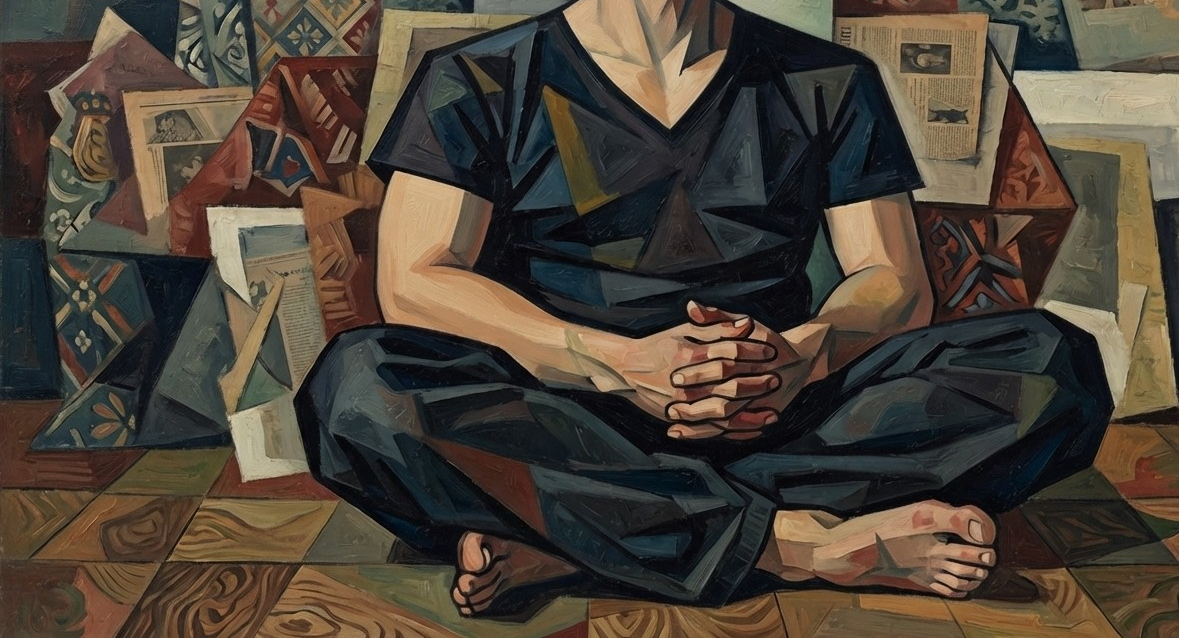
Sukhasana (Cross-legged)
Sukhasana, in Western usage often simply known as the easy cross-legged seat, is far more than just a comfortable seating posture on the floor; it is one of the most fundamental and traditional meditation postures in yoga. The Sanskrit name itself already reveals its essence: Sukh means ease, joy, well-being, or happiness, while Asana stands for posture. Sukhasana is thus literally translated as the “pose of ease” or the “happy pose.” In contrast to advanced and often demanding meditation seats like the Lotus Pose (Padmasana) or the Hero Pose (Virasana), which require extreme flexibility in the hips and knees, Sukhasana invites every practitioner—regardless of age or prior experience—to find rest and establish a stable, grounded basis for introspection.
The physical alignment in Sukhasana requires a delicate interplay between grounding and upward extension. To assume the posture, one first sits upright on a yoga mat or a meditation cushion. The legs are loosely crossed, with the lower legs crossed at the middle of the shins and the knees sinking outward. Ideally, the feet slip slightly under the knees, creating a symmetrical, stable triangular shape. A central element for correct execution is the position of the pelvis. Often, in an untrained state, the pelvis tilts backward, leading to a rounded back and unhealthy stress on the lumbar spine. To counteract this, it is recommended to consciously feel the sitting bones into the floor and, if necessary, elevate the pelvis using a blanket or a cushion. This causes the pelvis to tilt slightly forward, allowing the natural S-curve of the spine to unfold.
From this stable base, awareness travels further upward. The spine lengthens vertebra by vertebra toward the ceiling, as if an invisible thread were gently pulling the crown of the head upward. The ribcage opens wide while the shoulders consciously glide down and back to release any tension from the neck. The chin remains parallel to the floor, and the gaze is either directed softly forward or the eyes are closed to turn the attention inward. The hands usually rest relaxed on the knees or thighs—either with the palms turned upward, symbolizing a receptive and open attitude, or turned downward, enhancing a feeling of grounding, calm, and stability. Often, mudras (meditative hand gestures) are also adopted to harmonize the flow of energy within the body.
The effects of Sukhasana extend far beyond the physically perceptible body. On a physical level, the posture gently opens the hips, stretches the groins, and strengthens the back muscles required to maintain an upright posture. Because the legs are crossed, circulation in the lower body is mildly regulated while the core remains stable and centered. Yet the true mastery of this asana lies in its mental and energetic dimension. In a world often characterized by hustle and constant overstimulation, Sukhasana offers a safe haven. Through the stability attained, the body becomes quiet, which in turn calms the mind. The deep, steady breathing facilitated in this upright position activates the parasympathetic nervous system, reduces stress, and fosters deep inner clarity.
Nevertheless, one should not be deceived by the name “Easy Pose”; for individuals with tight hip flexors or knee pain, Sukhasana can initially present quite a challenge. Herein lies the wisdom of yoga: props are not a sign of weakness, but rather a tool to perfect the posture. Anyone who notices their knees painfully hanging in the air or their back rounding after a short time should not hesitate to sit higher or support their knees with additional blankets and cushions. Over time, through regular practice and patient effort, the body opens up, the muscles find natural relaxation, and Sukhasana becomes what it promises: an effortless, joyful state of being in which body, breath, and mind merge in perfect harmony.
When walking, walk. When sitting, sit. Above all, don't wobble.
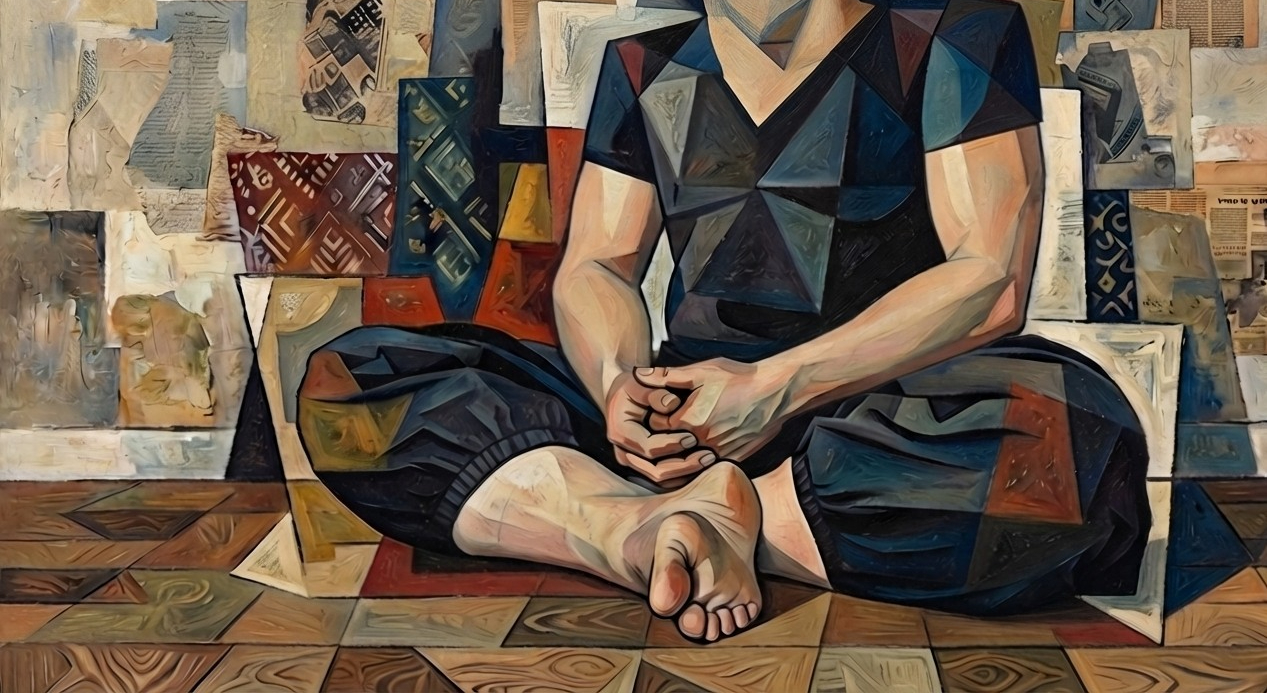
Muktasana (Burmeseseat)
The Burmese posture, treasured in the meditation practice of many Buddhist traditions and in yoga as one of the most accessible yet stable postures, presents a wonderful alternative to classical positions like the lotus seat or the simple cross-legged seat. Unlike the latter, where the shins cross in the middle and the knees are often pulled upward by the pressure, the Burmese posture is characterized by a flat arrangement of the legs close to the floor. In this position, both knees rest completely on the floor or on a support, while the lower legs lie flat on the ground one after the other in front of the body, without either foot resting on a thigh or the legs locking tightly into one another. This biomechanical arrangement provides a broad, flat base that shifts the body’s center of gravity low down, thereby enabling remarkable physical stability for hours on end.
The precise alignment and physical setup of the Burmese posture require a deliberate approach to bring the body into an optimal physical balance. One typically begins in a long-legged seated position on the floor and ideally places a meditation cushion, a folded blanket, or a meditation bench beneath the buttocks. Elevating the pelvis is crucial here, as it allows the hip joints to open forward and prevents the weight of the upper body from tipping backward. From this elevated position, the right leg is bent, and the heel is drawn toward the perineum or in front of the pubic bone so that the lower leg lies flat on the mat. The left leg is then positioned in front of the right leg, also lying flat on the floor, causing the knees to sink outward and the two lower legs to rest on the ground side by side or slightly staggered. The defining characteristic that distinguishes the Burmese posture from other cross-legged postures is the fact that the legs do not cross or stack on top of each other; rather, ideally neither knee touches the other foot, and both knees find firm contact with the floor.
This flat triangular structure of the legs has profound effects on muscle tension and the joints. While traditional cross-legged sitting often exerts uneven pressure on the knee joints and requires the inner thigh muscles to work hard, the body weight in the Burmese posture distributes evenly across three points of contact: both knees and the pelvis. This creates a natural tripod that makes side-to-side swaying of the upper body nearly impossible. The hips are opened gently yet continuously without overstraining ligaments or tendons in the knee joints. Nevertheless, this seat also requires a certain baseline mobility in the hip flexors. If the knees hover in the air, it leads to unconscious tension in the thighs over the long term, which is why it is entirely common and advisable in practice to support the knees with small cushions or blankets until they rest softly or are fully supported.
From this solid and grounded base, the upward extension of the spine unfolds. The pelvis forms the foundation: through the slight elevation, it tilts minimally forward, allowing the natural, gentle forward curve (lordosis) of the lumbar spine to emerge. A rounded back, which would lead to chronic tension in the lower back during prolonged sitting, is avoided in this way. The thoracic spine opens, the shoulders flow relaxed downward away from the ears, and the sternum lifts slightly, giving space to the heart and promoting deep, unobstructed diaphragmatic breathing. The cervical spine lengthens as the crown of the head mentally stretches toward the ceiling and the chin is drawn inward minimally, as if holding a light, invisible thread at the top of the skull. The gaze is either directed softly downward onto the floor or the eyes close completely to clear the path inward.
The arms and hands mirror this inner attitude of alertness and relaxation. They hang loosely from the shoulder joints. The hands usually rest in the lap, with the right hand often placed gently into the left and the tips of the thumbs lightly touching, forming a closed energy circuit and centering the focus. Alternatively, the hands can also be placed with palms facing upward or downward directly on the thighs near the creases of the hips, depending on which variation the practitioner finds more stable. This hand placement supports shoulder release and prevents the arms from exerting unnecessary weight on the torso.
In the context of meditation—especially in the South Asian Vipassana and Theravada traditions, where the Burmese posture is by far the most commonly recommended body position—the true value of this asana reveals itself. Meditation often requires hours of abiding in stillness. When the body hurts, physical pain shackles the mind and makes deep inner peace impossible. The Burmese posture is regarded here as the “golden middle path”: it is stable enough to support the body for a long time without slipping into a state of lethargy, and it is simultaneously relaxed enough to largely maintain blood circulation in the legs, which often significantly delays the falling asleep of the limbs compared to tighter seats like the half or full lotus. The mind can concentrate fully and completely on the breath or the stream of sensations, carried by a physical posture that testifies to both vigilance and gentle surrender.
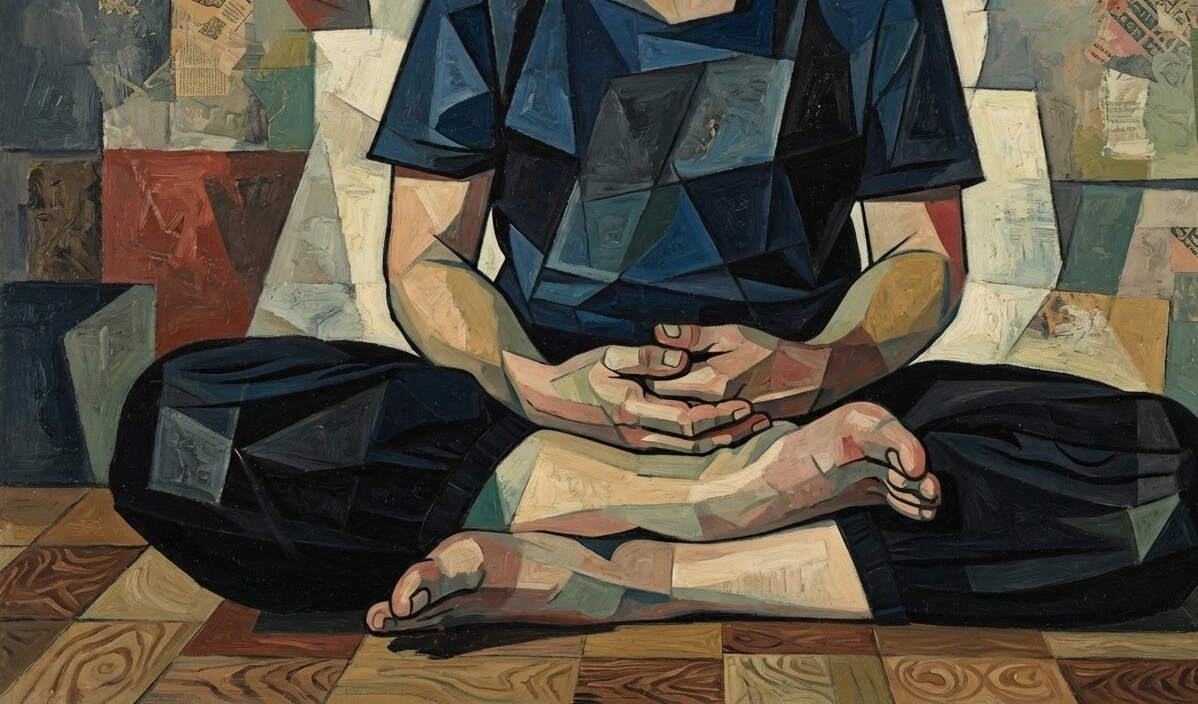
Siddhasana (Complete Pose)
Siddhasana, known in yoga as the “Complete Pose” or “Adept’s Pose,” is considered in traditional Indian scriptural lore to be one of the absolute most important and effective meditation postures of all. The Hatha Yoga Pradipika, one of the oldest and most significant foundational texts of yoga, even elevates Siddhasana above all other asanas, describing it as the gateway to liberation. The name derives from the Sanskrit word Siddha, which means a perfected being, an enlightened seer, or a master who has attained spiritual perfection and control over mind and body. In contrast to the simple cross-legged seat (Sukhasana), which is designed for pure comfort, Siddhasana is a highly developed, energetically oriented seating posture aimed at directing the subtle flow of energy within the body, keeping the mind uncompromisingly awake, and anchoring the body in an absolutely motionless, stable pyramid for many hours.
The physical alignment and structure of Siddhasana require exact mechanical precision and demand a certain degree of flexibility in the hips and knees. Unlike relaxed seating postures, the feet here are not simply placed next to each other or casually crossed, but are drawn into the lap of the body in a very specific sequence. One begins in a long-legged seated position on a firm surface or a meditation cushion that slightly elevates the pelvis. First, the left leg (or the right, depending on anatomical preference) is bent at the knee, and the heel is brought directly to the perineal region—the area between the anus and the genitals—applying gentle pressure to this point. For women, the heel is traditionally placed at the entrance of the vagina, which is why this specific variation is also referred to in classical texts as Siddha Yoni Asana. This physical pressure on the perineum is no coincidence; rather, it serves to modulate and channel the downward-flowing energy (Apana Vayu).
In the next step, the remaining right leg is bent, and the foot is placed in front of the first foot such that the ankle bones lie directly against each other or close together. The foot slides upward just enough so that the heel of the outer foot rests directly above the pubic bone, while the toes of this upper foot slip deeply into the gap between the thigh and calf of the lower leg. This precise interlocking of the feet causes the legs to lock together like a solid fastening. The knees sink flat onto the floor, creating an extremely stable triangular base that shifts the body’s center of gravity far downward. This closed leg posture makes any sideways swaying impossible, and the body rests within itself like an unshakeable rock.
The upper body’s alignment in Siddhasana builds upon this perfect foundation. By elevating the pelvis with a cushion or a folded blanket, the pelvis tilts minimally forward, preventing the lumbar spine from collapsing. The spine straightens vertebra by vertebra in its natural S-curve, supported by the deep abdominal and back muscles, which are wonderfully relieved in this seat because the skeletal structure carries the weight. The ribcage opens wide and free, the shoulders flow relaxed downward and backward, and the neck lengthens as the crown of the head stretches gently upward. The chin draws inward slightly (a subtle variation of Jalandhara Bandha), which regulates the energy flow in the throat channel and instantly places the mind into a state of alert introspection. The eyes can be closed or rest with a soft, downward gaze directed at the floor in front.
The hands in Siddhasana traditionally rest in a holding and centering gesture. They usually rest in the lap, with the right hand resting relaxed inside the left and the tips of the thumbs lightly touching. Alternatively, the palms can be placed facing upward or downward directly on the knees or thighs. Crucially, the arms should hang heavy and free of tension from the shoulder joints so as not to burden the upper torso.
The deeper effect of Siddhasana unfolds primarily on the level of subtle energy, or prana. In yogic belief, thousands of energy channels (nadis) run through the body, and they are targeted and influenced in this seating position. By closing the ankle bones over one another and applying pressure to the perineum, specific nadis are physically stimulated, preventing the mind from falling into lethargy (tamas) or excessive agitation (rajas). Siddhasana fosters a clear, sharp, and highly concentrated mind. For this reason, this posture has been favored for millennia by yogic masters and sages when engaging in deep meditative absorption (samadhi) or pranayama practices (breath control) over extended periods of time. It is a posture of mastery that disciplines the body, refines the breath, and leads the mind into absolute stillness.