

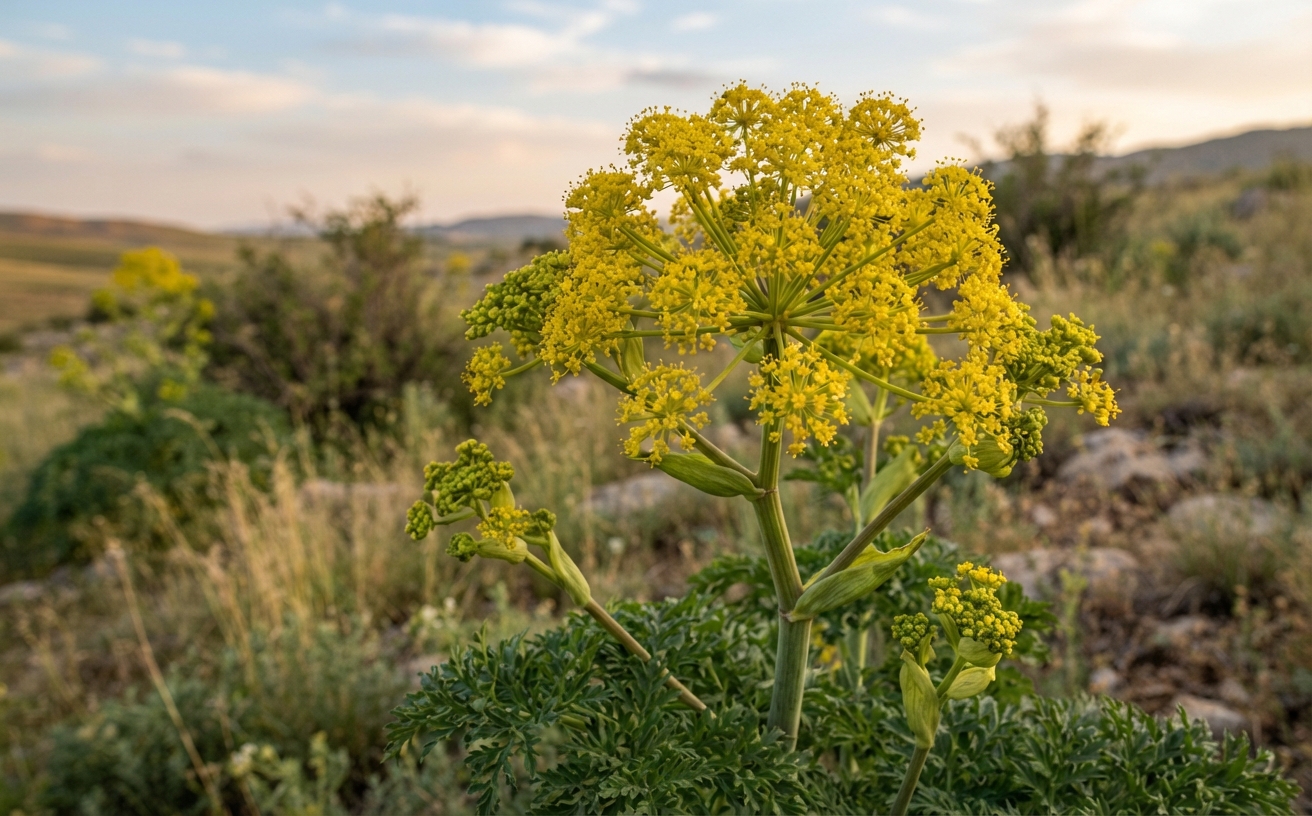
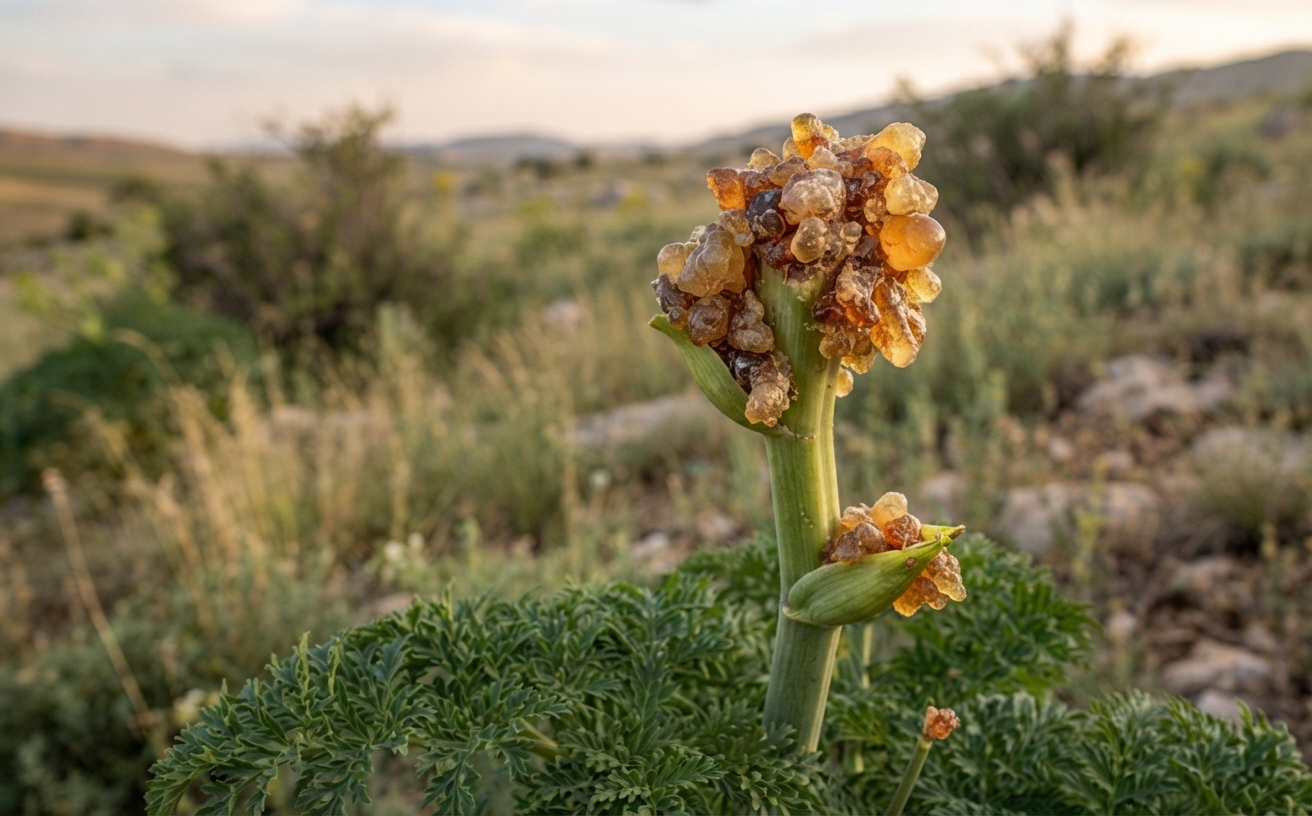

Asafoetida is a fascinating resin, known in European herbalism as Teufelsdreck (devil’s dung) or Asant, and in the Indian region as Hing, or Hingu in Sanskrit. Phonetically, the term has no literal meaning in Indian languages, unlike its German counterpart, but serves as the traditional name for this specific plant extract. The plant, an umbelliferous species called Ferula foetida, yields a milky resin when its roots are incised, which dries into a solid, resinous mass upon exposure to air.
Extracting the resin is complex and traditionally done by hand. The plant grows primarily in the arid regions of Western Asia, particularly in Iran and Afghanistan. For harvest, the upper parts of the thick taproot are cut off, and the exuding milky sap secretion is dried in the sun until it forms a solid, reddish-brown or gray mass.
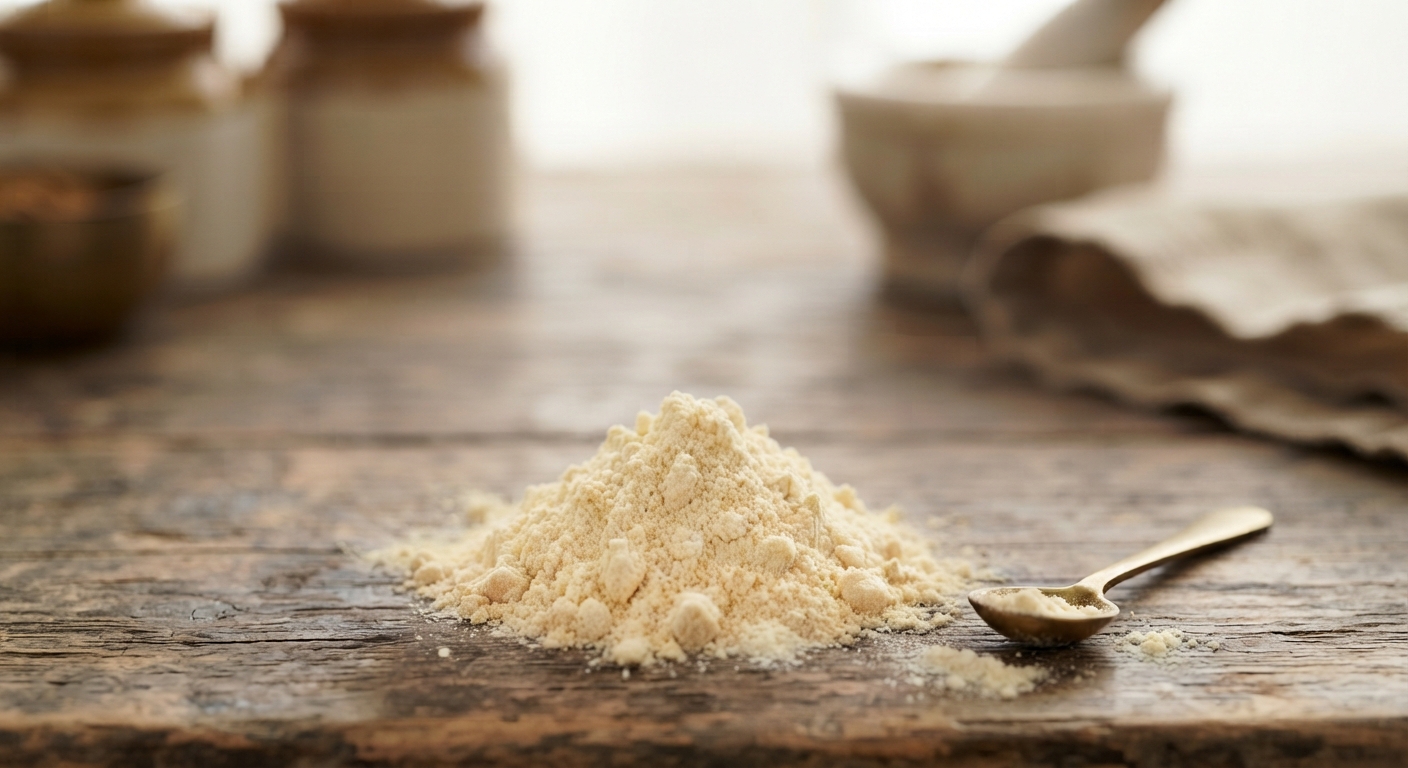
In its raw state, the resin has an extremely pungent, sulfurous smell reminiscent of an intense mixture of garlic and onions. It is precisely this odor that earned it its historical German name. The secret to using it lies in heating. When the raw resin is sautéed directly in hot oil or ghee, the unpleasant odor completely disappears, and a delicate, onion-like aroma emerges, which is particularly valued in Indian and vegan cuisine.
History
In the historical texts of the Vedic tradition, Asafoetida holds a special position because, despite its intense odor, it is classified as sattvic. This classification means that it promotes purity, mental clarity, and spiritual elevation. Historical texts describe it as a substance that clarifies the mind and frees it from sluggish or disturbing influences, while simultaneously possessing a deeply rooted, earthly component.
In European herbalism and the historical pharmacopoeias of the Middle Ages and early modern period, the demon-repelling aspect took center stage. Due to its repulsive, sulfurous scent, people in ancient writings were firmly convinced that Teufelsdreck could keep evil spirits, pestilence, and demons away. Old traditions record the resin as a protective remedy against the evil eye, often worn in amulets or burned as a powerful deterrent during times of plagues.
The Romans knew true Asafoetida in the form we know it today, mostly in everyday life under the name and as a direct successor of the extremely coveted silphium (or silphion) from North Africa, which went extinct in the 1st century AD.
Since the original silphium disappeared due to overexploitation and the inability to cultivate it, the Romans increasingly turned to Asafoetida imported from Persia and Armenia as a cheaper and similarly tasting substitute in later times. In ancient writings such as those of Pliny the Elder or in the Roman cookbook of Apicius, both substances were treated partly synonymously or as closely related because of their similar resinous and spicy properties.
Drives away all spirits, ghosts, and sorcery with its foul odor when placed on glowing coals and its smoke rises.
Scientific Research
Modern scientific research on asafoetida is primarily dedicated to the intensive analysis of its complex chemical constituents and their pharmacological effects on the human organism. Biochemical analyses show that the resin consists to a considerable extent of resin acids, gum, and essential oils, with volatile sulfur-containing compounds such as organic disulfides being responsible for the characteristic and pungent odor. Researchers have found in laboratory studies that these specific sulfur compounds possess strong antimicrobial, antiviral, and antifungal properties, which partially corroborates the traditional use for warding off infections and epidemics from a scientific perspective.
Furthermore, pharmacological studies focus on the anti-inflammatory, antioxidant, and antispasmodic mechanisms of asafoetida. Extracts of the plant show noticeable effects in experimental models in regulating blood sugar levels, lowering blood pressure, and inhibiting platelet aggregation, thereby demonstrating blood-thinning properties. In the field of gastrointestinal health, there are also sound scientific explanations for traditional use, as certain ingredients stimulate the secretion of digestive enzymes and act spasmolytically on the smooth muscles of the digestive tract, which relieves flatulence and cramps. Recent pharmacological investigations are also exploring potential neuroprotective effects and the action of extracts on the central nervous system, increasingly deciphering the centuries-old observation of a profound physiological and mental influence by the plant on a molecular-biological level.
The investigation of the pharmacological action profiles of asafoetida is intensively dedicated to the secondary plant compounds contained therein, especially sesquiterpene coumarins and sulfur-containing heterocycles. In preclinical studies, these complex molecules exhibit remarkable biological activities ranging from the modulation of specific enzyme systems to interaction with receptors in the cardiovascular and central nervous system. In particular, the antioxidant capacity of the resin is increasingly coming into the focus of research, as the contained phenolic compounds can effectively neutralize free radicals and thus counteract cellular oxidative stress.
In addition, toxicologists and pharmacologists are investigating the anti-ulcer and hepatoprotective effects of the extracts in order to substantiate traditional applications in medicine with evidence-based data. Phytotherapy also analyzes the extent to which the expectorant and bronchospasmolytic properties of the volatile oils can be used therapeutically in chronic respiratory diseases. Through the use of modern chromatographic and spectroscopic methods, science is succeeding with ever-increasing precision in isolating the individual active components of this extraordinary resin and deciphering their synergistic effects on the human body in detail.
The scientific and analytical examination of asafoetida now also includes detailed investigations into the potential cancer-inhibiting and immunomodulatory properties of isolated sesquiterpene coumarins. Laboratory studies on various cell lines indicate that certain ingredients of the resin are able to initiate apoptotic processes in malignant cells and inhibit the proliferation of tumor and cancer cells. These antineoplastic mechanisms are usually based on the regulation of specific signaling pathways and the induction of oxidative stress specifically within the altered cells, while healthy tissue is largely spared.
Another focus of current research lies on metabolic and hepatoprotective effects, particularly with regard to chronic degenerative metabolic diseases. Scientific experiments on animal models have shown that the administration of asafoetida extracts can bring about significant improvements in insulin resistance, dyslipidemia, and liver damage caused by toxins. The bioactive compounds contained in the resin support the regeneration of liver cells by activating liver-protecting enzymes and drastically lowering inflammatory markers in blood plasma.
Additionally, neuroscientists are analyzing the psychopharmacological effects of asafoetida, since traditional contexts have reported a calming and antispasmodic effect on the nervous system for millennia. Pharmacological tests have demonstrated that certain extracts bind to GABA receptors in the brain or modulate their activity, triggering anxiolytic and antispasmodic reactions similar to those of classical sedatives. Through these multifaceted laboratory-medical findings, the circle closes between the millennia-old empirical application in natural medicine and modern evidence-based pharmacology.
Detailed Analysis
| Nutrient 100g | Asafoetida |
|---|---|
| Energy | approx. 297 kcal |
| Protein | approx. 4.0 g |
| Fat | approx. 1.1 g |
| Carbohydrates | approx. 67.8 g |
| Dietary Fiber | approx. 7.0 g |
| Magnesium | approx. 70 mg |
| Phosphorus | approx. 50-90 mg |
| Calcium | approx. 680-690 mg |
| Iron | approx. 7-39 mg |
| Potassium | approx. 80-1480 mg |
| Sodium | approx. 25-68 mg |
Asafoetida in Ayurveda
In the context of the previous examination of asafoetida, Ayurvedic doctrine forms the fundamental link between spiritual classification, traditional medicine, and modern scientific findings.
In Ayurveda, the resin has been considered an indispensable remedy for thousands of years for harmonizing the Vata and Kapha doshas. Due to its strongly heating, digestive-promoting, and antispasmodic properties, it is traditionally used to effectively balance disorders in the gastrointestinal tract, such as flatulence, colic, and weak digestive power. Ayurvedic practice also utilizes it because of its profound effect on the nervous system, through which it is administered for neurological complaints, respiratory diseases, and the general strengthening of the body.
In the Ayurvedic system, asafoetida, referred to in Sanskrit as hingu, is classified as one of the most important spices for regulating inner winds and vital life energy. Traditional texts describe it as strongly heating, pungent, and bitter in taste, as well as easily digestible, thereby specifically stimulating digestive fire power.
A central concept in Ayurveda is the ability of asafoetida to release blocked energies in the body and dissolve accumulated gases in the digestive tract. Because it reduces Vata in deep tissues, it is used for almost all Vata disorders that manifest as pain, nervousness, or cramps. To mitigate the raw pungency and potentially unbalanced properties of the resin, classical Ayurvedic pharmacy dictates that it should never be consumed raw, but rather roasted in ghee or oil before use, allowing its therapeutic effect to unfold optimally.